晚期古代阿拉伯与启示Late Antique Arabia and Revelation
穆罕默德的宣讲产生于连接拜占庭、萨珊、红海贸易和多种一神传统的阿拉伯世界,而不是与外界隔绝的沙漠。Muhammad's proclamation arose in an Arabia connected to Byzantine, Sasanian, Red Sea, Jewish, Christian, and monotheist worlds.
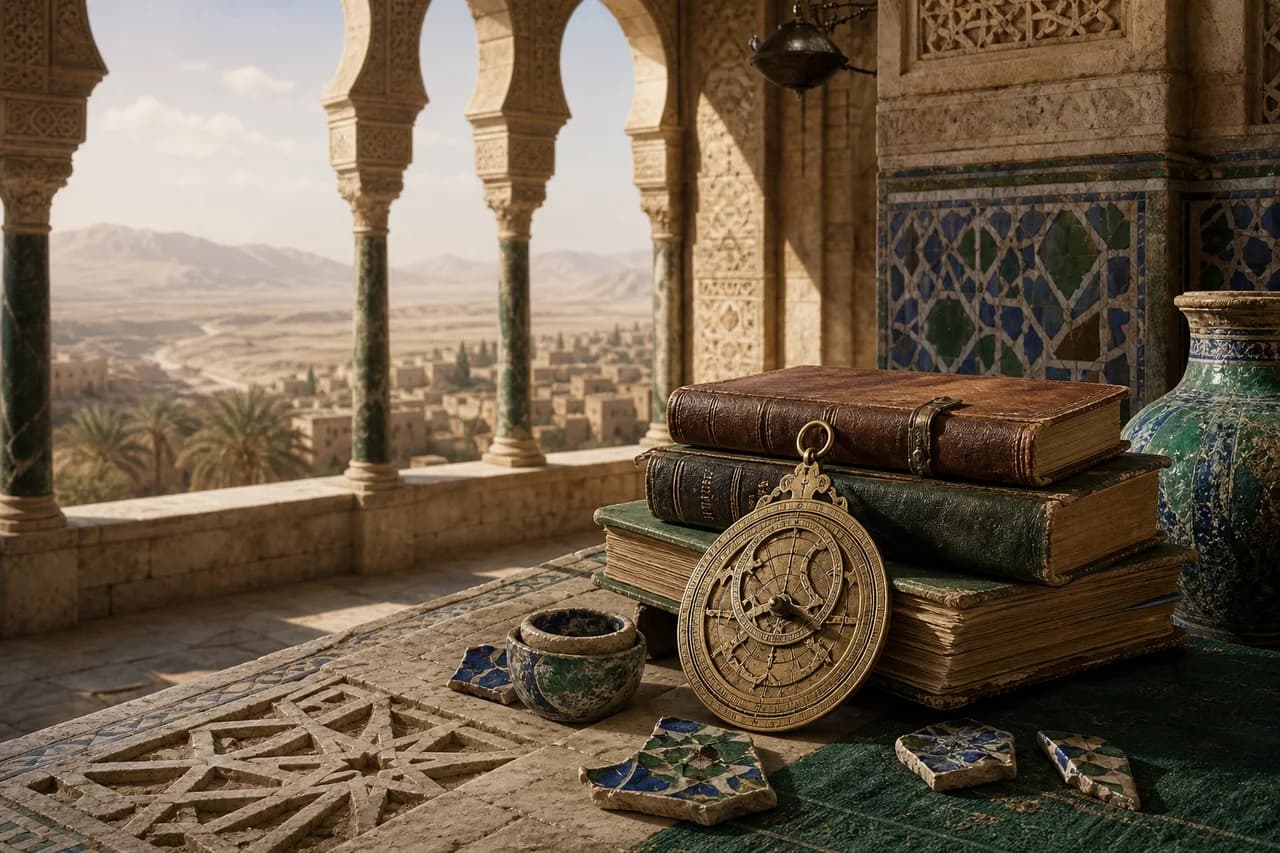
六世纪末的麦加位于商路与朝圣网络中,克尔白及周边圣所把古莱什各氏族连接起来。阿拉伯半岛并非与世界隔绝:北方有拜占庭与萨珊战争,红海两岸有基督教王国,犹太与基督徒社群、阿拉伯多神礼仪和一神论语言彼此接触,却没有组成单一宗教版图。Late-sixth-century Mecca stood within trade and pilgrimage networks, its Kaaba and sanctuary linking Quraysh clans. Arabia was not isolated: Byzantium and Sasanian Iran fought to the north, Christian kingdoms faced each other across the Red Sea, and Jewish, Christian, Arabian polytheist, and monotheist traditions met without forming one uniform map.
伊斯兰传记称穆罕默德幼年失去父母,由祖父和叔父保护,成年后参与商旅并与赫蒂彻结婚。约610年,他开始宣告从安拉领受启示:唯一造物主、末日审判、照顾孤儿穷人以及财富自足的危险。赫蒂彻、阿里、艾布·伯克尔等最早支持者形成小群体;“谁最先归信”的排序后来带有功德竞争,较稳妥的核心是宣讲从家庭与亲密网络开始。Islamic biography says Muhammad lost his parents young, received protection from grandfather and uncle, joined trade, and married Khadija. Around 610 he began proclaiming revelation from God: one Creator, final judgment, care for orphan and poor, and the danger of wealth's self-sufficiency. Khadija, Ali, Abu Bakr, and others formed a small circle. Later rankings of the first convert carried contests over merit; the secure core is a mission beginning in household and intimate networks.
公开宣讲后,冲突同时涉及神学、家族忠诚与社会声望。少数信徒遭到嘲弄、压力和个别暴力,部分人前往阿比西尼亚避难;穆罕默德仍依靠未归信叔父艾布·塔利卜的氏族保护。约619年赫蒂彻与艾布·塔利卜相继去世,家庭支持和政治庇护同时削弱。塔伊夫求援失败后,他转向在朝觐季接触叶斯里卜代表,一场宗教宣讲于是走到必须寻找新社会空间的关口。Public preaching brings theological, kinship, and status conflict. Believers face mockery, pressure, and some violence; some seek refuge in Christian Abyssinia, while Muhammad still depends on clan protection from his non-Muslim uncle Abu Talib. Khadija and Abu Talib die around 619, removing household support and political shelter. After failed outreach at Ta'if he negotiates with delegates from Yathrib during pilgrimage, bringing a religious mission to the point of needing a new social space.
背景、证据与解释
麦加传统上由古莱氏部族主导,克尔白既是朝觐圣所,也与地区交换和部族秩序相连。阿拉伯半岛并非宗教同质:地方神祇崇拜、犹太社群、不同基督教传统和一神论语言并存。《古兰经》反复讲述亚伯拉罕、摩西、马利亚和耶稣,表明它参与晚期古代关于启示、审判与共同体的广泛对话,同时以鲜明的阿拉伯修辞提出自身权威。Mecca's sanctuary belonged to tribal and exchange networks in a religiously diverse peninsula. Qur'anic narratives of Abraham, Moses, Mary, and Jesus engage late antique debates about revelation and judgment while asserting an authoritative Arabic proclamation.
伊斯兰传统记载穆罕默德约在610年首次领受启示,最初信息强调唯一的上帝、末日责任、施舍与社会不义。麦加追随者遭遇排斥,部分人迁往阿比西尼亚。历史研究主要依靠《古兰经》和较晚的先知传重建这一时期;具体年代与事件细节的可信度并不相同,因此既不能把后世传记逐字当作现场报道,也不应忽略其中可能保存的早期记忆。Islamic tradition dates Muhammad's first revelation to around 610, emphasizing one God, judgment, charity, and injustice. Reconstruction relies on the Qur'an and later biography, whose details carry unequal historical confidence: later narrative is neither a transcript nor evidence to dismiss wholesale.
早期宣讲首先在亲属、朋友、商人与受保护关系中传播,赫蒂彻的经济和情感支持、阿布·伯克尔等人的社交网络都被传统视为关键。古莱氏反对也不宜只解释为担心偶像贸易受损,它还涉及祖先权威、末日平等对精英秩序的挑战及部族保护。夜行与登霄等信仰叙事在后世礼仪和圣地记忆中极重要,历史页面则区分经典陈述、圣训展开与可外部验证的层次。Early proclamation moved through kinship and patronage, with Khadija's support central in tradition. Opposition involved ancestral authority, social hierarchy, and tribal protection, while later sacred narratives require distinct source layers.
事情怎样一步步发展
- 01
6世纪sixth century
阿拉伯位于晚期古代交流网络Arabia within late antique networks
半岛通过红海、波斯湾和商路连接拜占庭、萨珊、埃塞俄比亚与也门。部族联盟提供保护,圣所和集市调节冲突;犹太、基督教及地方崇拜并存。麦加贸易规模有争论,但绝非与一神论世界隔绝。Arabia connected Byzantine
这一步改变了什么:《古兰经》熟悉的先知、审判和启示语言有区域背景,同时形成自身阿拉伯表达。Qur'anic prophetic and judgment language has a regional context while forming a distinct Arabic voice.
- 02
约610—615年c. 610–615
穆罕默德的启示宣讲挑战麦加秩序Muhammad's proclamation challenges Meccan order
传统称穆罕默德在希拉山洞首次领受启示,最早段落以强烈韵律宣告创造、复活、审判和照顾孤儿穷人。他起初向亲友传播,赫蒂彻和少数同伴支持。唯一上帝的要求不仅否定偶像,也批评财富自足和忽视弱者。Tradition places first revelation at Hira. Early proclamations join creation
这一步改变了什么:信仰承诺开始构成超越家族互惠的新道德共同体。Commitment began forming a moral community beyond ordinary kin reciprocity.
- 03
615—622年615–622
抵制、保护丧失与迁徙准备Boycott
部分信徒迁往阿比西尼亚寻求基督徒君主保护。穆罕默德因叔父阿布·塔利卜的部族庇护暂免直接杀害;叔父和赫蒂彻去世后,处境恶化。他尝试在塔伊夫寻求支持失败,随后与雅斯里布代表协商仲裁和防卫安排,迁徙并非突然逃跑,而是经过政治谈判。Some followers sought refuge in Christian Abyssinia. After Abu Talib and Khadija died
这一步改变了什么:先知使命从劝诫运动走向需要领土、联盟和治理能力的共同体。Prophetic mission moved toward a community requiring alliance
关键人物不是一个名字
穆罕默德Muhammad
约570—632年c. 570–632
伊斯兰传记称他幼年失去父母,由祖父和叔父抚养,成年参与商旅并为赫蒂彻管理贸易,约25岁与她结婚。孤儿经历和依赖部族庇护的处境,为其宣讲中照顾弱者和社会责任提供了可理解背景,但不能把启示简单化为心理产物。Biography describes orphanhood, upbringing by kin, trade for Khadija, and marriage around age twenty-five. Such context illuminates concern for vulnerability without reducing revelation to psychology.
他约40岁开始宣讲,经历嘲讽、抵制和追随者受迫害。穆斯林相信《古兰经》是上帝经天使传达的启示;历史研究可分析段落语言、听众和社会冲突,却不能以一般史学工具验证启示的神圣来源。麦加阶段的穆罕默德首先是警告者和召集者,尚不是拥有军队的统治者。Beginning near forty, he faced ridicule and pressure. Muslims confess divine revelation; historians can analyze language, audience, and conflict, not verify divine origin. In Mecca he was a warner without state power.
理解此人的关键:不能只从后来胜利倒推他的早年;十余年间他是缺乏强制资源、依靠亲属保护和信息说服力维系的小群体领袖。Later victory should not be projected backward onto a leader dependent for years on protection and persuasion.
查看人物完整资料 →哪些地方不能简单下结论
先知传记的细节有多可靠?How reliable are details in prophetic biography?
- 传统学术通过传承链和传述者评价保存并筛选材料。Traditional scholarship preserved and evaluated reports through chains.
- 现代怀疑观点强调完整传记成书较晚,叙事可能受后世法律和政治争论塑造。Modern skepticism stresses late compilation and later legal-political shaping.
目前较稳妥的判断:《古兰经》、早期铭文和相对独立材料应优先;传记不能全盘照收或全盘丢弃,应按传承时间、相互印证和叙事目的逐条评估。Prioritize Qur'an
理解这一阶段的关键
- 《古兰经》的宣讲把伦理责任、末世警告和一神信仰结合起来。Qur'anic proclamation joined ethics, judgment, and monotheism.
- 麦加冲突使早期信徒必须寻找新的政治与社会空间。Conflict in Mecca forced believers to seek a new social and political setting.
本章依据与延伸阅读(3)
- 古兰经The Qur'an
- 伊本·希沙姆本《先知传》(西拉传统)Ibn Hisham's recension of the Sira (prophetic biography tradition)
- 《麦加的穆罕默德》与《麦地那的穆罕默德》Muhammad at Mecca and Muhammad at Medina · W. Montgomery Watt · 1956